
A single slip-and-fall on a cracked sidewalk outside your Detroit storefront can generate a claim that threatens everything you've built. The average bodily injury liability claim in Michigan has reached roughly $77,661, sitting 169% above the national average. That's not a typo. For small business owners operating in the Motor City, understanding general liability insurance, from coverage limits and bodily injury claims to exclusions and costs, isn't optional. It's a financial survival skill.
Detroit's economy is rebounding. New restaurants, tech startups, and skilled trades businesses are opening across Midtown, Corktown, and the greater metro area every month. But growth brings exposure. Whether you're a contractor renovating homes in Grosse Pointe or running a retail shop on Michigan Avenue, one uninsured incident can wipe out years of profit. This guide breaks down what your policy actually covers, what it doesn't, and what you should expect to pay in 2026.
Why Detroit Small Businesses Need General Liability Insurance
Running a business in Detroit means operating in one of the country's more expensive insurance markets. Rising claim severity in Michigan, especially for bodily injury, continues to push commercial liability rates upward. That reality makes carrying proper coverage less of a "nice to have" and more of a baseline requirement for staying solvent.
Common Risks for Motor City Enterprises
Detroit's climate alone creates risk. Great Lakes freeze-thaw cycles crack sidewalks, ice over parking lots, and cause roof leaks, all of which can injure customers or damage neighboring property. A restaurant patron who slips on ice outside your entrance or a passerby hurt by a falling sign during a winter storm can file a claim against your business.
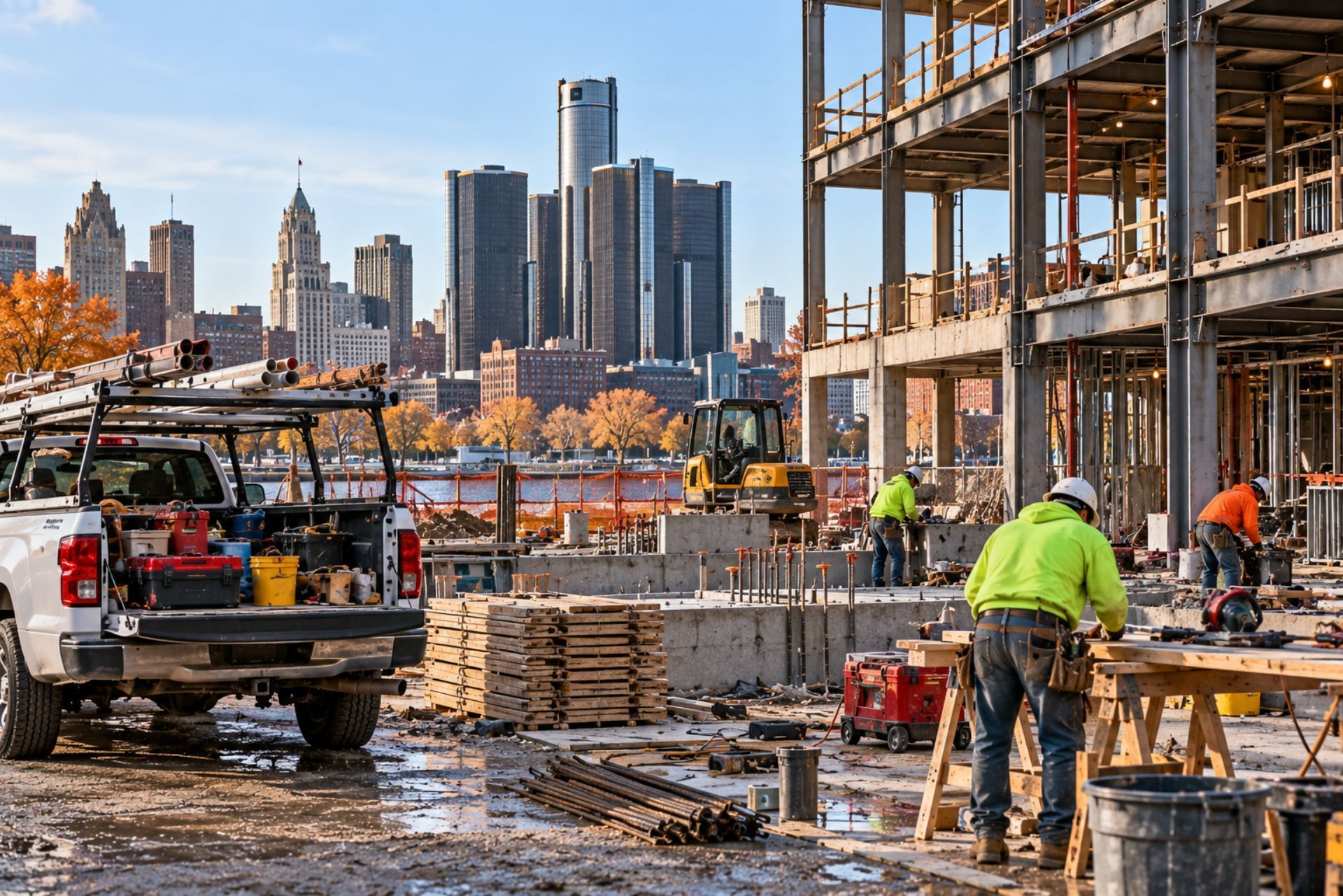
Construction and trades businesses face even sharper exposure. A plumber working in a client's basement who accidentally floods the finished space is looking at a property damage claim. Retailers deal with shoppers tripping over displays. Service businesses can face advertising injury claims if marketing materials inadvertently infringe on a competitor's rights.
Michigan Legal and Lease Requirements
Michigan doesn't mandate general liability insurance by state law for every business type, but that doesn't mean you can skip it. Most commercial landlords in Detroit require tenants to carry a minimum of $1 million per occurrence and $2 million aggregate before signing a lease, according to thecontractormatrix.com. If you're bidding on City of Detroit contracts, you'll need proof of coverage, typically a certificate of insurance (COI), before your proposal is even reviewed.
Michigan's LARA (Licensing and Regulatory Affairs) oversees contractor licensing, and many Residential Builder or Maintenance & Alteration (M&A) license holders find that clients and general contractors demand liability coverage as a condition of the job. Without it, you're locked out of the best-paying projects.


By: John T. Frye, Jr
Managing Partner at Doeren Mayhew Insurance Group
What General Liability Insurance Covers
A standard general liability policy protects your business against third-party claims. "Third-party" is the key phrase here: these are claims made by people outside your company, not your employees and not you.
Bodily Injury and Property Damage
This is the core of any GL policy. If a customer, vendor, or bystander is injured on your premises or by your operations, your policy covers their medical expenses, legal defense costs, and any settlement or judgment. Property damage works the same way: if your work damages someone else's property, your insurer pays.
Given that property damage liability claims in Michigan average about $5,184 per incident, even a minor accident can add up fast once legal fees enter the picture. Bodily injury claims are far more expensive, and Michigan's numbers run well above national averages.
Advertising Injury and Personal Harm
Your GL policy also covers advertising injury, which includes claims like copyright infringement in your ads, slander, or libel. If a competitor alleges your marketing campaign copied their slogan, your policy pays for your legal defense. Personal injury coverage handles claims of wrongful eviction, false arrest, or invasion of privacy connected to your business operations.
Comparison: General Liability vs. Professional Liability
These two policies protect against different risks. Confusing them is one of the most common mistakes small business owners make.
| Feature | General Liability | Professional Liability (E&O) |
|---|---|---|
| Covers bodily injury | Yes | No |
| Covers property damage | Yes | No |
| Covers professional errors | No | Yes |
| Covers advertising injury | Yes | Sometimes |
| Required for most leases | Yes | Rarely |
| Typical limit | $1M per occurrence / $2M aggregate | $1M per claim / $1M aggregate for solo practitioners |
If you provide advice, designs, or professional services, you need both. A general liability policy won't cover a claim that your consulting advice cost a client money, and a professional liability policy won't help if someone trips in your office.
Comparison of Coverage Types and Limits
Most Detroit businesses start with the industry-standard $1 million per occurrence and $2 million aggregate limit, which is the most common configuration for general liability in Michigan according to guardinsuremi.com. That structure means your insurer will pay up to $1 million for any single claim and up to $2 million total across all claims during the policy period.
For many small operations, those limits are sufficient. But businesses working on larger commercial projects, government contracts, or high-risk jobs often need higher thresholds. An umbrella policy can extend your coverage to $5 million or $10 million in aggregate, and it's often cheaper than you'd expect because it only kicks in after your primary policy is exhausted.
Standard GL policies
don't cover employee injuries, professional errors, or damage to your own property. A Business Owner's Policy (BOP) bundles general liability with
commercial property coverage, filling some of those gaps. Contractors should also consider inland marine coverage for tools and equipment in transit and installation floaters for work-in-progress at job sites.
Average Costs for Detroit Business Owners
Pricing for general liability coverage in Detroit varies widely based on your industry, revenue, claims history, and the specific risks tied to your operations. Michigan's status as one of the pricier insurance markets in the Midwest means you'll likely pay more than a comparable business in Ohio or Indiana.
Factors Influencing Your Premium
Your premium is shaped by several variables:
- Industry and risk classification: A roofing contractor pays far more than a freelance graphic designer.
- Annual revenue and payroll: Higher revenue generally means higher premiums because more business activity equals more exposure.
- Claims history: Past claims signal higher risk to underwriters. Even one bodily injury claim can raise your rate for years.
- Location within Detroit: Operating in a high-traffic retail corridor creates different risk than a home office in the suburbs.
- Coverage limits and deductible: Choosing a $2 million per occurrence limit instead of $1 million raises your premium, while a higher deductible lowers it.
Recent shifts in Michigan's no-fault auto reform have also had indirect effects. As drivers select lower personal injury protection limits, more medical costs are being pushed toward general liability and health insurance, contributing to upward pressure on commercial premiums.
Cost by Industry: Construction vs. Retail vs. Service
While exact quotes depend on your specific situation, the spread across industries is significant. Construction businesses, particularly those doing demolition, roofing, or concrete work, face the highest premiums because the injury and property damage risks are substantial. Retail businesses fall in the middle, with foot traffic and product liability driving costs. Professional service firms, like accounting or consulting offices, typically pay the least for GL coverage because their physical risk exposure is lower.
The takeaway: don't assume your neighbor's premium reflects what you'll pay. Get quotes based on your actual operations, not industry averages.
Common Questions About Detroit Business Insurance
FAQ: Do I need insurance if I work from home in Detroit?
Yes, in most cases. Your homeowner's policy won't cover business-related claims. If a client visits your home office and is injured, or if your business activities cause property damage, you need a separate GL policy. Even online businesses can face advertising injury claims.
FAQ: How much coverage is standard for a new small business?
The $1 million per occurrence and $2 million aggregate structure is the most common starting point. Most landlords and clients in the Detroit area consider this the minimum acceptable level, as noted by thecontractormatrix.com. If you're in construction or working on commercial projects, you may need higher limits or an umbrella policy from day one.
FAQ: Does general liability cover my own tools and equipment?
No. GL policies cover damage you cause to other people's property, not your own. If your tools are stolen from a job site or damaged in transit, you'll need inland marine coverage or a contractor's tools and equipment policy. A BOP may include some equipment coverage, but check the limits carefully.
FAQ: How do I get a certificate of insurance for a Detroit city contract?
Contact your insurance agent or carrier and request a COI. You'll need to provide the name of the entity that should be listed as an additional insured, which is usually the City of Detroit or the general contractor. Most agents can issue a COI within 24 to 48 hours. Being named as an additional insured on someone else's policy is also a smart move if you're a property owner hiring subcontractors: always request it and review the full policy document, not just the certificate.
Protecting Your Business Assets
General liability insurance in Detroit isn't just a line item on your budget. It's the barrier between a manageable incident and a business-ending lawsuit. Michigan's claim costs run well above national averages, commercial landlords and city contracts require proof of coverage, and the risks tied to Detroit's climate and economic growth aren't slowing down.
Start with the standard $1 million/$2 million structure, then evaluate whether your industry, contract requirements, or growth plans call for higher limits or supplemental policies like a BOP, professional liability, or umbrella coverage. Don't wait for a claim to find out what your policy doesn't cover. Review your exclusions now, talk to an independent agent who understands the Detroit market, and make sure your coverage matches your actual exposure. Your business is worth protecting with the right policy, not just the cheapest one.
About The Author:
John T. Frye, Jr.
Taylor Richardson is the founder and CEO of 5M Insurance. With a focus on real estate risk management, Taylor helps investors and property managers nationwide secure smarter, scalable coverage solutions—without the headaches of traditional insurance brokers.
Personal Insurance Subservices
Auto insurance offers crucial financial protection against accidents, injuries, property damage, theft, and other costly liabilities.
Homeowners insurance is not only critical in protecting your property investment and personal belongings, but also protects against potential liability claims in the future.
Even if you have adequate homeowners and auto insurance coverage, umbrella insurance policies help to cover large, unexpected losses.
Plan for the future and get peace of mind with our time-tested life insurance solutions that are customized to your unique needs.
Long-term care insurance offers coverage for out-of-pocket expenses that are generally not covered by health insurance, Medicare, or Medicaid.
Disability insurance can replace a percentage of your income in the event you are unable to work due to an illness, injury, or other health condition.
We treat every client with the utmost care and attention. However, we know high-net-worth individuals have unique exposures and needs that require specialized expertise.
How We Can Help
Contact us to learn more about how we can help protect your long-term financial security.
Related VIEWpoints



Contact Us
