
Picture a framing crew wrapping up a garage addition off Twelve Mile Road. A gust catches an unsecured sheet of OSB, it cracks a neighbor's windshield, and two weeks later the homeowner's adjuster is calling you. One loose panel can become a claim worth thousands, and how that story ends depends on the policies you bought months earlier.
Contractor insurance in Warren, MI covers more than a single liability policy. Your coverage choices decide whether you can pull permits, bid city work, keep your trucks on the road, and replace a stolen trailer full of tools without draining your operating account. Michigan's freeze-thaw cycles, lake-effect snow on I-696, and a busy residential remodeling market in Macomb County all add their own risks.
This guide is written for working contractors: remodelers,
roofers,
concrete crews, electricians, and
general builders. It covers the policies Warren projects require, the gaps that catch people off guard, and how bonds and certificates fit together. Use it as a working checklist, current for 2026, before your next bid or permit application.
Warren sets its own insurance expectations for anyone doing permitted work, and they go beyond the minimums many contractors carry by habit. The city's published insurance requirements call for proof of coverage before permits are issued. They also require that certificates name the City, its elected officials, employees, and volunteers as Additional Insureds for all permitted work.
That additional insured wording trips up more applications than any other detail. A certificate showing $1 million in liability coverage does nothing for you at the permit counter if the city isn't properly listed. Ask your agent for a blanket additional insured endorsement, and confirm it covers both ongoing and completed operations.
Licensing is separate from insurance, but the two go together. Michigan's Department of Licensing and Regulatory Affairs (LARA) issues Residential Builder licenses and Maintenance & Alteration (M&A) licenses. An M&A license covers specific trades like roofing, siding, or concrete. Your insurance classification should match your license and your actual work. If you're licensed for M&A siding but quietly taking on full kitchen remodels, a carrier can contest a claim on misclassification.
Important: Keep a current copy of your license, your certificate, and your endorsements in one folder you can email in under five minutes. Permit clerks and general contractors won't wait.

By: John T. Frye, Jr
Managing Partner at Doeren Mayhew Insurance Group
Protecting Your Business with General Liability and Commercial Auto
These two policies handle the claims Warren contractors see most often: damage to someone else's property and accidents involving your vehicles. Most project owners and the city will check for both before you set foot on a job.
General Liability: The Foundation of Every Policy
General liability (GL) pays for third-party bodily injury and property damage caused by your work. Think of a homeowner tripping over an extension cord, a water line you nicked during a bathroom gut, or paint overspray on a parked car. It also includes completed operations coverage, which matters when a deck railing you installed fails eight months after the final inspection.
The industry-standard limit is $1 million per occurrence and $2 million aggregate. Annual GL premiums for solo operators in Michigan typically run $500 to $900. Small crews of 2 to 5 employees usually pay between $900 and $2,300. Roofers and contractors doing structural work will land on the higher end.
The catch is the exclusions. Many GL policies exclude work by uninsured subcontractors, residential new construction, or anything above three stories. Read the exclusions page before you sign. If a commercial contract demands $5 million in total limits, an umbrella policy stacks on top of your GL and auto far more cheaply than raising each base limit.
Commercial Auto for Michigan Road Conditions
Your personal auto policy almost certainly excludes business use once a truck is titled to your company, hauls equipment, or carries employees. Commercial auto fills that gap. That matters on a February morning when a loaded trailer jackknifes on black ice near Van Dyke.
For City of Warren projects, you'll need proof of $1,000,000 combined single limit for any auto insurance, including hired and non-owned vehicles. Hired and non-owned coverage protects you when an employee runs to the supply house in their own pickup and rear-ends someone. Without it, that claim lands on your business with no coverage behind it.
Securing Your Assets: Tools, Equipment, and Inland Marine
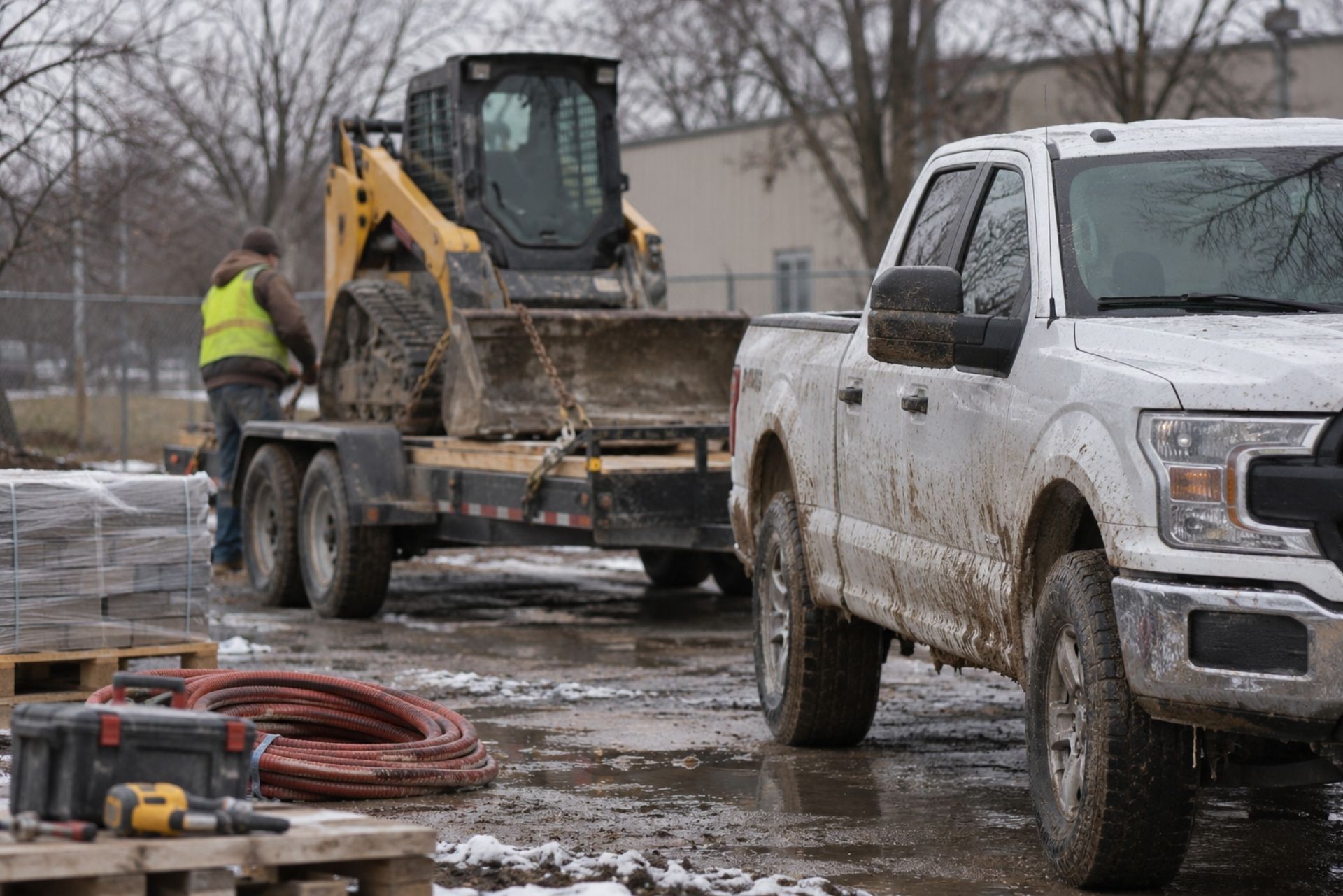
GL doesn't cover your own property. If thieves cut the lock on your job trailer overnight and walk off with a compressor, nailers, a laser level, and a generator, your liability policy won't pay a dime. That's what inland marine coverage is for. It's the insurance category that protects property that moves: tools, equipment, and materials in transit or sitting on a job site.
Most contractors need some mix of these:
- Tools and equipment floater: Covers scheduled and unscheduled tools wherever they are, including your truck, the job site, or a storage unit.
- Contractor's equipment coverage: For larger items like skid steers, mini excavators, and concrete mixers, usually scheduled by serial number.
- Installation floater: Protects materials and work-in-progress until the owner accepts the job. Think of the $14,000 in cabinets delivered Friday that get damaged by a weekend roof leak.
- Rented equipment coverage: Rental companies will charge you for damage to that boom lift, so cover it here instead of paying their markup waiver.
Timing works in your favor right now. The inland marine market is buyer-friendly as of Q3 2026, with
rate changes ranging from flat to +5% despite rising equipment values. If you bought new gear in the last two years, update your schedule now. Underinsured equipment is one of the most common gaps adjusters find after a theft.
Workers' Compensation and Michigan State Compliance
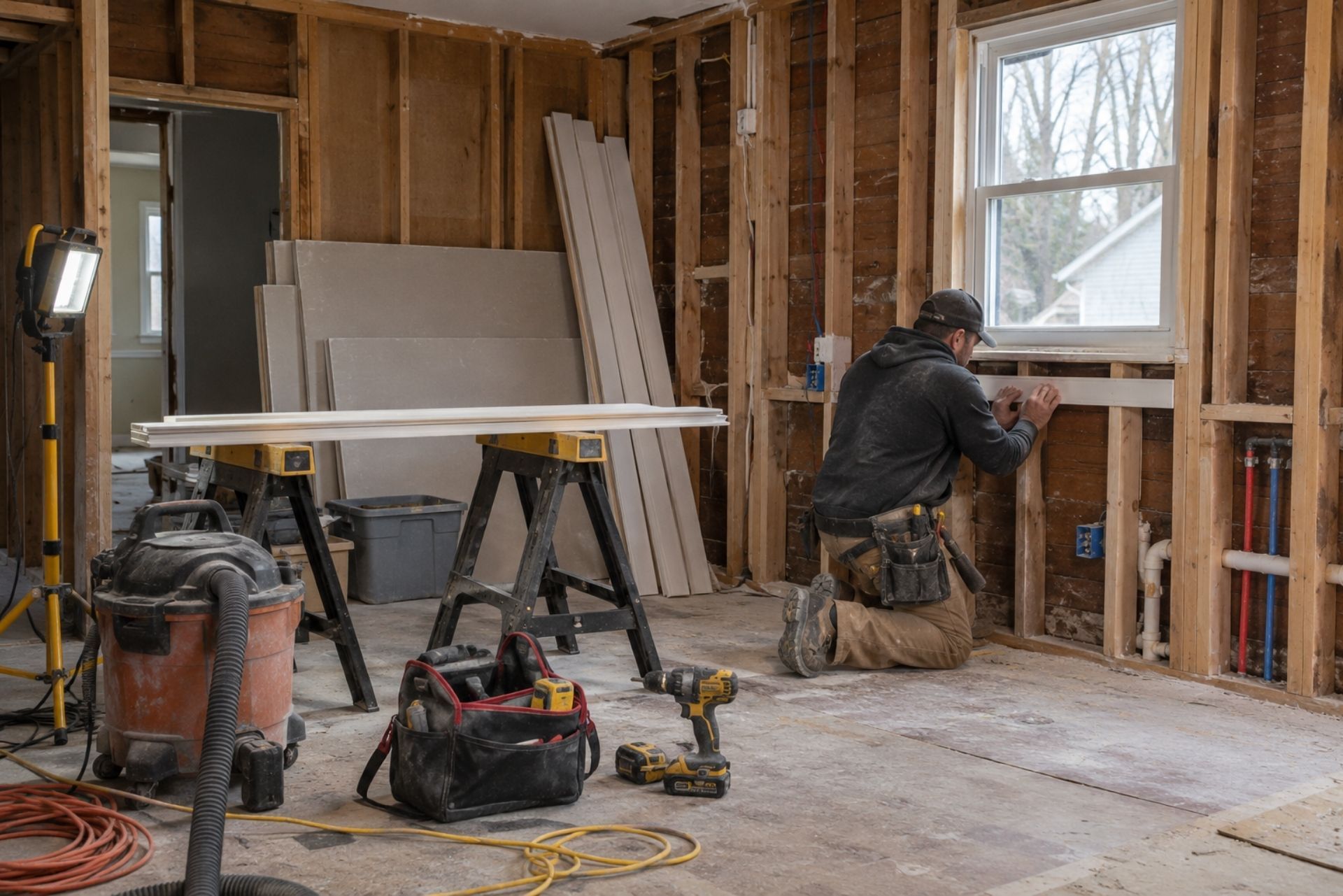
Michigan's Workers' Disability Compensation Act requires most employers to carry workers' comp, and enforcement is real. Operating without required coverage can bring fines, stop-work exposure, and personal liability for an injured worker's medical bills and lost wages. A single fall from a ladder can produce a claim that runs well into six figures once surgery and months of wage replacement are added up.
Workers' comp pays medical costs and partial lost wages for employees hurt on the job. It also generally shields you from being sued by that employee. Premiums are based on payroll and class codes, and the state publishes a 2026 workers' compensation rate book that sets the benefit calculations behind claims.
Here's what that means for you:
- Classify every worker correctly. Calling a full-time helper a "1099 sub" doesn't remove comp liability if you control their hours and tools.
- Collect certificates from every subcontractor. If an uninsured sub's employee gets hurt, your policy may be forced to pay, and your audit will charge you for that payroll.
- Document OSHA safety training, especially fall protection. A clean safety record helps your experience modifier, which directly lowers future premiums.
Sole proprietors without employees may be able to exempt themselves. Many general contractors will still demand a certificate, so check before you bid.
Surety Bonds vs. Insurance: Understanding the Difference
Plenty of contractors assume a bond is just another insurance policy. It isn't. Insurance protects you from losses. A bond protects your customer or the government from you failing to meet your obligations. If the surety pays a claim, it will come back to you for repayment.
Warren uses bonds as a licensing and permit tool for certain trades. Cement and sidewalk contractors, for example, are required to post a $1,500 surety bond to work in the city. That bond guarantees your work in the right-of-way meets city standards.
Public projects bring bigger numbers. Under Michigan law, performance and payment bonds for public works projects over $50,000 must be at least 25% of the contract amount. Sureties look closely at your financial statements, credit, and work history before approving bonding capacity. Start that relationship before you need a bid bond, not the week the bid is due.
Comparison Table: Bonds vs. Liability Insurance
| Feature | Surety Bond | General Liability |
|---|---|---|
| Who it protects | The project owner or city | You and your business |
| Parties involved | Three: you, owner, surety | Two: you and insurer |
| Claim repayment | You repay the surety | Insurer absorbs the loss |
| Typical trigger | Unfinished work, unpaid suppliers | Injury or property damage |
| Underwriting focus | Credit and financials | Trade risk and claims history |
| Warren example | $1,500 cement contractor bond | Required for permitted work |
Managing Certificates of Insurance (COI) for New Projects
A certificate of insurance is a one-page summary of your coverage. It's how project owners, general contractors, and the city verify you're insured. It's also only a snapshot. It doesn't change your policy, and a certificate claiming coverage that doesn't exist won't protect anyone.
Handle certificates like this:
- Request them early. Give your agent the exact certificate holder name and address, plus any required wording, at least a few business days ahead.
- Match the endorsements. If a contract requires additional insured status, waiver of subrogation, or primary and non-contributory wording, the actual endorsement must exist on your policy.
- Track expirations. Keep a spreadsheet of every active certificate you've issued and every one you've collected from subs.
- Collect from subs before day one. No certificate, no site access. Your audit will thank you.
If you're a property owner hiring a Warren contractor, ask to be named as an additional insured. Then go a step further and request the endorsement pages themselves, not just the certificate. That review takes ten minutes and tells you whether the coverage behind the paperwork actually responds.
Common Questions About Warren Contractor Policies
How much does contractor insurance cost in Warren? General liability for a Michigan solo operator usually runs $500 to $900 a year, while small crews pay roughly $900 to $2,300. Auto, comp, and equipment coverage are priced separately based on vehicles, payroll, and tool values.
Do I need workers' comp if I only hire subcontractors? Possibly. If your subs lack their own coverage, your carrier may count their payroll at audit and their injuries can fall on you, so collect their certificates.
What auto limit does the City of Warren require? City projects require $1,000,000 combined single limit, including hired and non-owned vehicles.
Does general liability cover my stolen tools? No. GL covers damage you cause to others. You'll need an inland marine tools and equipment floater for your own gear.
Is a surety bond the same as being insured? No. A bond guarantees your performance to the owner or city, and you must repay the surety for any claim it pays.
Does my GL cover design mistakes? Usually not. If you provide design-build services or drawings, ask about professional liability (E&O) coverage for design errors.
Making the Right Choice for Your Long-Term Growth
The contractors who grow steadily in Warren treat insurance as part of their bidding strategy, not an afterthought. A solid GL policy with the right endorsements gets you through the permit counter. Commercial auto with hired and non-owned coverage protects you on winter roads. Inland marine keeps a trailer theft from stalling your schedule. Workers' comp and properly collected sub certificates keep audit surprises off your books.
Bonds and certificates are where most deals stall, so build those relationships early. Talk to a surety before you chase public work. Set up a certificate tracking system before your fourth active job, not your fourteenth.
Your next steps: pull your current policies, check them against the city's additional insured and auto requirements, update your equipment schedule while inland marine rates are soft, and verify your license class matches your work. Fix the gaps now, while it's paperwork. After a claim, it's a lawsuit.
About The Author:
John T. Frye, Jr.
Taylor Richardson is the founder and CEO of 5M Insurance. With a focus on real estate risk management, Taylor helps investors and property managers nationwide secure smarter, scalable coverage solutions—without the headaches of traditional insurance brokers.
Personal Insurance Subservices
Auto insurance offers crucial financial protection against accidents, injuries, property damage, theft, and other costly liabilities.
Homeowners insurance is not only critical in protecting your property investment and personal belongings, but also protects against potential liability claims in the future.
Even if you have adequate homeowners and auto insurance coverage, umbrella insurance policies help to cover large, unexpected losses.
Plan for the future and get peace of mind with our time-tested life insurance solutions that are customized to your unique needs.
Long-term care insurance offers coverage for out-of-pocket expenses that are generally not covered by health insurance, Medicare, or Medicaid.
Disability insurance can replace a percentage of your income in the event you are unable to work due to an illness, injury, or other health condition.
We treat every client with the utmost care and attention. However, we know high-net-worth individuals have unique exposures and needs that require specialized expertise.
How We Can Help
Contact us to learn more about how we can help protect your long-term financial security.
Related VIEWpoints



Contact Us
